HoneyPower Official Website › Blog › GMP And Third-Party Testing
GMP And Third-Party Testing: What Those Labels Actually Verify
The HoneyPower pack carries several seals: GMP certified, all-natural ingredients, foreign and domestic sourcing. This blog's testing and quality page already says plainly that these are the seller's own artwork, not independent certifications. This article goes a level deeper: what does a real GMP certification actually check, what does it not check, and why does the specific category this product sits in, sexual-enhancement supplements, have a documented and published contamination problem worth understanding before assuming any seal covers it.
- GMP, current Good Manufacturing Practice, is a real FDA regulatory framework (21 CFR Part 111) that inspects manufacturing process, sanitation and record-keeping. It does not require testing the finished product for what a published research trial actually used.
- A 2025 laboratory-methods review in the Journal of Natural Products describes adulteration and contamination as an ongoing, active risk category in the dietary supplement industry generally, not a solved problem.
- Sexual-enhancement supplements specifically have a well-documented published record of being adulterated with undisclosed prescription drug compounds, including PDE5 inhibitors, going back to a 2013 JAMA Internal Medicine paper and continuing in reviews as recent as 2022.
- None of the published adulteration literature names HoneyPower specifically. This article is about the documented risk pattern in the product category, using the seller's own testing-and-quality disclosures as the baseline, not an allegation about this specific product.
- A certificate of analysis (CoA) reference number, like the one printed on this bottle, is a filing reference. Verifying what it actually certifies means requesting or locating the underlying lab report, not just seeing that a code exists.
What the seals on this pack are, in the seller’s own words
Start with what this website already says, because it is more candid than most in the category. The footer on every page of this site, and the dedicated testing and quality page, both state plainly that the seals shown, GMP certified, all-natural ingredients, foreign and domestic sourcing, are the seller's own pack artwork, not third-party certifications displayed with a verifiable license number or a link to an independent certifying body's database. That disclosure is the honest starting point for this article, and it is worth taking seriously rather than skimming past.
The question this article answers is not whether that disclosure is accurate, it is already printed on the site. The question is what a reader should understand GMP itself to mean when they see it referenced, since GMP is not a made-up term. It is a real, legally defined regulatory standard, and understanding what it does and does not cover is more useful than either dismissing it entirely or assuming it covers more than it does.
What GMP certification actually inspects
Current Good Manufacturing Practice for dietary supplements is a real FDA regulation, codified at 21 CFR Part 111. A 2020 review in Critical Reviews in Food Science and Nutrition on the current regulatory guidelines for dietary supplements in the United States lays out what this framework actually requires: manufacturers must establish and follow written procedures for personnel qualifications, facility and equipment sanitation, production and process controls, quality control record-keeping, handling of consumer complaints, and product specifications.
A facility that follows these requirements and passes an inspection is doing something real: it means the physical plant is clean, batches are documented, and there is a paper trail if something goes wrong. That is not nothing. Facility hygiene and record-keeping failures are a genuine risk in any manufacturing environment, and a GMP-compliant facility has controls a non-compliant one does not.
The gap: manufacturing process versus finished-product testing
Here is the part that gets lost when a GMP seal appears next to ingredient names and a benefits panel. GMP, as a framework, is about process controls: how the facility operates, not what specific compound and at what concentration ends up in a specific capsule that ships to a specific customer. The 2020 regulatory review above notes that dietary supplements, unlike prescription drugs, do not require FDA pre-market approval or FDA-mandated efficacy testing before they reach a shelf. A facility can be fully GMP-compliant on its process controls while the finished product's actual ingredient content, purity or contamination status is verified only as thoroughly as that specific manufacturer chooses to test it.
This is not a criticism specific to HoneyPower. It is a structural feature of how the entire US dietary supplement category is regulated, described plainly in the regulatory literature. A 2025 methods review in the Journal of Natural Products on dietary supplement adulteration frames laboratory testing, things like DNA-based species verification and mass-spectrometry screening for undisclosed compounds, as an active, ongoing area of methods development precisely because the underlying problem, verifying what is actually in a finished product rather than assuming the facility's process controls guarantee it, has not been solved industry-wide.
Check the ingredients page against the label's own claims
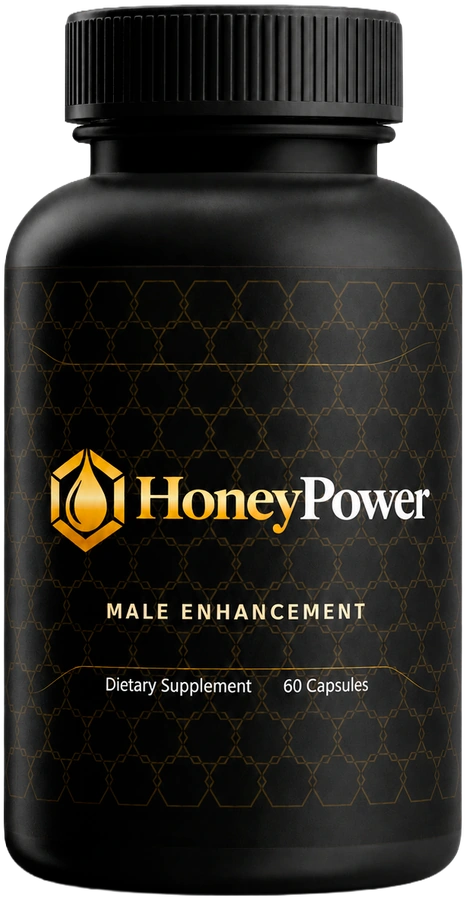
Six named ingredients, no amounts printed. The ingredients page sets every name beside the dose its own published research used.
One bottle $69 · six bottles $294 · 180-day money-back guarantee
Order HoneyPowerTwo capsules a day · 60 per bottle
Why this ingredient category specifically has a documented problem
There is a further reason to read quality claims carefully in this specific product category, sexual-enhancement supplements, beyond the general structural gap described above. This category has an unusually well-documented, published history of adulteration with undisclosed pharmaceutical compounds, distinct from the herbal ingredients actually named on a label.
A 2013 paper in JAMA Internal Medicine, titled plainly "Adulterated sexual enhancement supplements: more than mojo," described testing of products marketed for sexual enhancement and finding a meaningful share contaminated with undeclared PDE5 inhibitors, the same class of compound found in prescription erectile dysfunction medications, at doses that can carry real drug-interaction risk for men on nitrates or certain blood pressure medications. That is not a one-off finding. A 2021 paper in Fundamental and Clinical Pharmacology, surveying the worldwide literature, called drug adulteration of sexual enhancement supplements an insidious public health problem, and a 2022 paper in the Journal of Clinical Pharmacology, reviewing continued findings through recent years, found the risk had not gone away. A separate 2022 analytical chemistry paper in Molecules describes specific laboratory screening methods developed to detect exactly these synthetic PDE5 compounds in products sold as herbal.
None of these papers name HoneyPower, and this article makes no claim that HoneyPower specifically has been tested and found to contain anything undisclosed. What this literature establishes is the pattern: this category, more than dietary supplements generally, has repeatedly been found to contain compounds not listed on the label, in products tested independently by researchers rather than by the manufacturers themselves. That is the specific reason a reader in this category has more reason than average to ask what independent, third-party testing, if any, stands behind a given bottle, rather than relying on a GMP seal or a printed lot number alone.
Reading a certificate of analysis reference
A certificate of analysis, or CoA, is a real laboratory document that, when it exists and is available to check, states what a specific batch was tested for and what it found: identity of ingredients, potency, and screening for contaminants like heavy metals or microbial contamination. A reference code printed on a bottle or a website, on its own, is a pointer to that document. It is not the document itself, and this website's own disclaimer says as much: the lot and certificate reference are filing references, not laboratory proof, in the words already printed in this site's footer.
For a reader who wants to verify what stands behind a specific batch, the useful next step is not the presence of a reference code but whether the underlying report, the actual lab results, is something the seller can produce or has published. That distinction, a reference existing versus the underlying data being available and checkable, is the practical test this article recommends applying to any supplement's quality claims, in this category or any other.
It is worth being specific about what a full CoA typically covers when one is produced and shared. A thorough report lists each tested analyte by name, the method used, for example high-performance liquid chromatography for potency or inductively coupled plasma mass spectrometry for heavy metals, and the result against a stated acceptance limit. A short reference code with no accompanying data answers none of that. The 2025 laboratory-methods review cited above spends much of its length on exactly this problem: the analytical chemistry to verify a finished herbal product's contents exists and continues to improve, DNA barcoding for plant identity, mass spectrometry for undisclosed synthetic compounds, but applying it to any given commercial batch is a choice the manufacturer makes, not something a GMP facility inspection requires by itself.
Four questions a real quality claim should be able to answer
- Is the GMP claim about the facility's process, or about this specific batch's contents? These are different things, and a seal answers only the first.
- Is there an underlying lab report behind the lot or CoA reference, and can it be produced? A code alone is a pointer, not a result.
- Has the product, or comparable products in this category, been independently tested for undisclosed pharmaceutical compounds? The published literature above shows this is not a hypothetical risk in this specific category.
- Does the seller distinguish its own marketing artwork from third-party certification, the way this website's own footer already does? That distinction is a sign of a more careful presentation, whatever the underlying testing turns out to be.
GMP certification is a real FDA framework covering manufacturing process, sanitation and record-keeping, not mandatory finished-product testing against a specific research standard. Dietary supplements do not require FDA pre-market approval or efficacy testing. Sexual-enhancement supplements specifically have a documented, published history of adulteration with undisclosed pharmaceutical compounds, described in the peer-reviewed literature from 2013 through 2022. None of that literature names HoneyPower. A lot number or CoA reference is a filing pointer, not proof on its own; the useful question is whether the underlying lab report is available to check.
References
- Dietary Supplement Adulteration: Laboratory Approaches to Risk Mitigation. J Nat Prod. 2025. PMID 40700739. https://pubmed.ncbi.nlm.nih.gov/40700739/
- Current regulatory guidelines and resources to support research of dietary supplements in the United States. Crit Rev Food Sci Nutr. 2020. PMID 30421981. https://pubmed.ncbi.nlm.nih.gov/30421981/
- Drug adulteration of sexual enhancement supplements: a worldwide insidious public health problem. Fundam Clin Pharmacol. 2021. PMID 33484004. https://pubmed.ncbi.nlm.nih.gov/33484004/
- Adulterated sexual enhancement supplements: more than mojo. JAMA Intern Med. 2013. PMID 23699734. https://pubmed.ncbi.nlm.nih.gov/23699734/
- Continued Risk of Dietary Supplements Adulterated With Approved and Unapproved Drugs. J Clin Pharmacol. 2022. PMID 35285963. https://pubmed.ncbi.nlm.nih.gov/35285963/
- Screening and Determination of Synthetic PDE-5 Inhibitors in Adulterated Sexual Enhancement Supplements. Molecules. 2022. PMID 36235271. https://pubmed.ncbi.nlm.nih.gov/36235271/
Read the quality claims with the right questions in hand
Ask what stands behind the GMP seal and the CoA reference before deciding. The 180-day window gives room to ask.
One bottle $69 · six bottles $294 · 180-day money-back guarantee
Order HoneyPowerTwo capsules a day · 60 per bottle