HoneyPower Official Website › Blog › Black Pepper Extract
Why Black Pepper Extract Is Not An Active Ingredient
Piperine is in these formulas to change what happens to everything else in the capsule, and it genuinely does. That makes it the most interesting row on a label for anybody taking a prescription medicine, and the one worth reading out loud at an appointment rather than skipping past as filler.
- Piperine inhibits both P-glycoprotein and CYP3A4, the transporter and the enzyme that between them handle a large share of oral medicines.
- With repeated exposure it also activates the pregnane X receptor, which pushes the same systems in the opposite direction.
- So the net effect on a given drug can be an increase or a decrease depending on the drug and the duration.
- This is a property of the ingredient rather than of any one brand, and it applies to every formula in the aisle carrying it.
- If you take prescription medication, this is the row to raise before the first capsule.
What piperine is doing in a blend
Black pepper extract appears in supplement formulas for one reason: to raise the absorption of the other ingredients. It is almost never sold on its own merits, it sits at the end of ingredient lists because it is present in small amounts, and the marketing term for it is usually bioavailability enhancer.
The claim behind that term is real. Piperine, the pungent alkaloid that makes black pepper hot, has measurable effects on the systems that decide how much of a swallowed compound reaches the bloodstream. The research is decades old and it is not controversial.
What is worth understanding is that the same property making piperine useful in a supplement makes it worth declaring to a prescriber. There is no version of this ingredient that boosts the botanicals you want boosted and leaves everything else alone.
The two systems it acts on
the study that identified what piperine does to drug handling is the foundational paper. It identified piperine as an inhibitor of human P-glycoprotein and of CYP3A4, and those two names cover an enormous amount of ground.
P-glycoprotein is an efflux transporter. It sits in the wall of the intestine and actively pumps compounds back out into the gut before they can be absorbed, which is part of how the body limits what gets in. Inhibiting it means less is pumped back out and more gets through.
CYP3A4 is a liver and gut enzyme responsible for metabolising a very large fraction of oral medicines. Inhibiting it means a drug is broken down more slowly, so more of it stays in circulation for longer.
a review of black pepper and drug absorption reviews what both of those mean for the intestinal absorption and hepatic metabolism of drugs, which is the clinical framing of the same findings.
The part that gets left out: it runs both ways
Here is the finding that turns a simple story into a careful one. the paper showing the effect runs both ways showed piperine activating the human pregnane X receptor, which is a regulatory switch that induces the expression of CYP3A4 and of multidrug resistance protein 1.
Induction is the opposite of inhibition. Where acute exposure slows a drug's breakdown, sustained exposure can increase the amount of enzyme available and speed it up. The two effects work on different timescales and can point in different directions.
| What piperine does | Over what timescale | What that does to a medicine |
|---|---|---|
| Inhibits P-glycoprotein | Acutely, from the first exposure | Less of the drug is pumped back out of the gut, so more is absorbed |
| Inhibits CYP3A4 | Acutely | The drug is broken down more slowly, so blood levels can run higher |
| Activates the pregnane X receptor | With repeated exposure over days | CYP3A4 and MDR1 are produced in greater quantity, so the drug is cleared faster |
| Net effect | Depends on the drug, the dose and how long you have been taking both | Levels can move up or down, which is why this is a conversation rather than a rule |
The last row is the important one. An absorption modifier is not a one-directional booster, and a label that describes it as one has simplified away the part that matters.
The practical consequence is that an absorption enhancer is not a dial that only turns one way. Depending on the medicine, the dose and how long somebody has been taking both, the level of a drug in the blood can move up or down. That is exactly why this belongs in a conversation with a prescriber rather than in a rule of thumb on a website.
Piperine is in an enormous number of supplements and its presence is usually a sign that somebody thought about formulation. The point is not that it should not be there. The point is that its presence is information a reader on medication needs, and a label that buries it among five botanicals is not making that easy.
Read the HoneyPower safety page before the first capsule
Two documented interactions sit on this label: the piperine one above and a warfarin interaction with ginseng. Both are set out in full, once, on the safety page rather than hedged across the site.
One bottle $69 · six bottles $294 · 180-day money-back guarantee
Order HoneyPower On The Official WebsiteTwo capsules a day · 60 per bottle · lot HON-26/GE-4888
Who this actually matters to
Most people taking no regular medication can read this article as formulation trivia. For a smaller group it is the most useful thing on the label.
- Anybody on a narrow-therapeutic-index medicine. Drugs where the gap between too little and too much is small are the ones where a shift in blood level matters most.
- Anybody on multiple prescriptions. The more medicines share the same metabolic route, the more an added modifier can do.
- Anybody who has just started or just stopped a medication. Timescale matters here, because the two piperine effects behave differently over days and weeks.
- Anybody on warfarin. Warfarin is already the interaction to watch on this kind of label for a different reason: the warfarin trial is a randomised trial in which ginseng reduced its anticoagulant effect.
None of that requires alarm, and none of it is a reason to hide from an ingredient list. It requires one conversation with the person who wrote your prescriptions, with the label in front of you.
Piperine's own pharmacology, briefly
For completeness: piperine does have a pharmacology of its own beyond its effect on absorption. a chapter on piperine's own pharmacology covers the work on piperine in relation to chronic disease, and it is a body of research in its own right.
That work is largely preclinical and it is not the reason piperine is in a male vitality capsule. It is included here because it would be incomplete to describe the ingredient purely as a vehicle, and because a reader who goes looking will find that literature and should know where it fits.
For the purposes of reading a supplement label, the absorption story is the one that matters and the chronic-disease work is background.
Reading a black pepper row on any label
| Question about a black pepper row | Why it matters |
|---|---|
| Is it piperine or whole black pepper? | Piperine is the isolated constituent and the one the research is about |
| What is the amount? | Bioavailability work generally uses small amounts, so a figure is checkable |
| Is it standardised? | A 95% piperine extract and ground pepper are different materials |
| What else is in the capsule? | The whole point of the ingredient is that it changes what happens to the others |
| What am I already taking? | This is the row to read out to whoever manages your prescriptions |
Five questions, and the last one is the only one on this website that is genuinely urgent for some readers.
The second row of that table is the one most labels can answer and this one cannot. Bioavailability research generally works at small, stated amounts of piperine, which makes a printed figure genuinely checkable against the literature. A name with no figure leaves the reader guessing at both the benefit and the interaction risk.
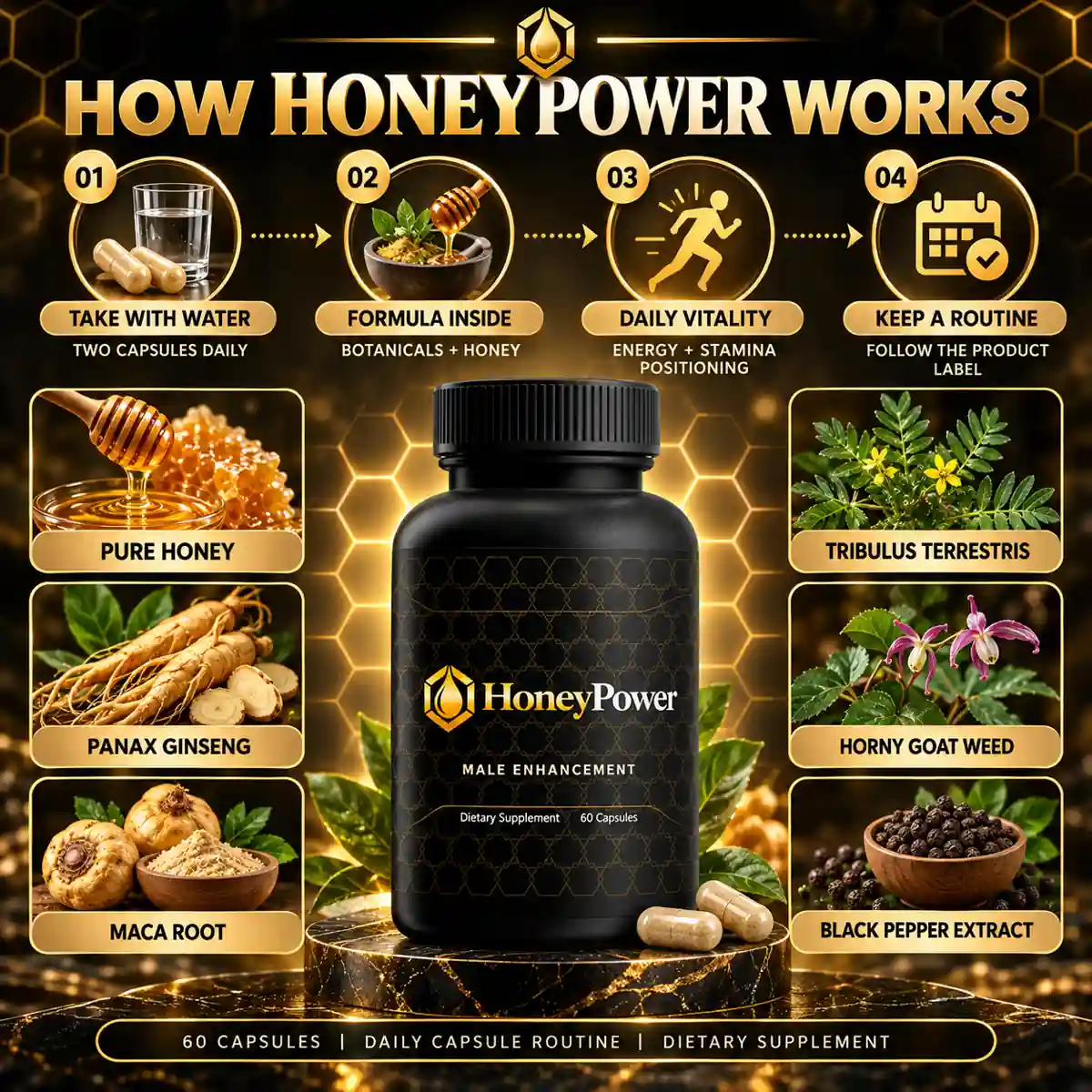
On this particular bottle, black pepper extract is the sixth of 6 names and carries no amount, no standardisation and no statement of piperine content. The safety page sets out what that means in practice.
Four questions worth asking about an absorption enhancer
- What is it enhancing? The claim only means something in relation to the other ingredients in the same capsule.
- Is there evidence for this specific combination? Piperine's effects have been studied with particular compounds. A general enhancement claim is weaker than a specific one.
- How much piperine? The research uses stated amounts; a label without one cannot be checked in either direction.
- Does it change anything I already take? This is the question. The answer comes from a prescriber with the label in front of them, not from a website.
Black pepper extract is the one ingredient in these blends whose entire job is to change what the others do, which also makes it the one that can change what a medicine does. It inhibits two systems acutely and induces them with repeated exposure, so the direction depends on circumstances. Read the row, and if you take anything on prescription, read it out loud to whoever prescribed it.
References
- Bhardwaj RK, Glaeser H, Becquemont L, et al. Piperine, a major constituent of black pepper, inhibits human P-glycoprotein and CYP3A4. J Pharmacol Exp Ther. 2002;302(2):645-50. PMID 12130727. https://pubmed.ncbi.nlm.nih.gov/12130727/
- Wang YM, Lin W, Chai SC, et al. Piperine activates human pregnane X receptor to induce the expression of cytochrome P450 3A4 and multidrug resistance protein 1. Toxicol Appl Pharmacol. 2013;272(1):96-107. PMID 23707768. https://pubmed.ncbi.nlm.nih.gov/23707768/
- Han HK. The effects of black pepper on the intestinal absorption and hepatic metabolism of drugs. Expert Opin Drug Metab Toxicol. 2011;7(6):721-9. PMID 21434835. https://pubmed.ncbi.nlm.nih.gov/21434835/
- Derosa G, Maffioli P, Sahebkar A. Piperine and Its Role in Chronic Diseases. Adv Exp Med Biol. 2016;928:173-184. PMID 27671817. https://pubmed.ncbi.nlm.nih.gov/27671817/
- Yuan CS, Wei G, Dey L, et al. Brief communication: American ginseng reduces warfarin's effect in healthy patients: a randomized, controlled trial. Ann Intern Med. 2004;141(1):23-7. PMID 15238367. https://pubmed.ncbi.nlm.nih.gov/15238367/
Order HoneyPower once the interaction question is settled
Two capsules a day, 60 to a bottle, and 180 days from purchase. The safety page names both interactions before you spend anything.
One bottle $69 · six bottles $294 · 180-day money-back guarantee
Order HoneyPower On The Official WebsiteTwo capsules a day · 60 per bottle · lot HON-26/GE-4888