HoneyPower Official Website › Ingredients
IngredientsHoneyPower Ingredients
Six ingredients are named on the HoneyPower artwork: pure honey, panax ginseng, maca root, tribulus terrestris, horny goat weed and black pepper extract.
The seller gives a weight for none of them, so beside every name this page prints the amount that ingredient's own published trials ran at, and the study it came from. Two capsules a day, sixty to a bottle, about a month.
Six names in a fixed order, and the research dose behind each one.
What the HoneyPower bottle actually prints
Four lines on the front, and two marketing sheets that go further.
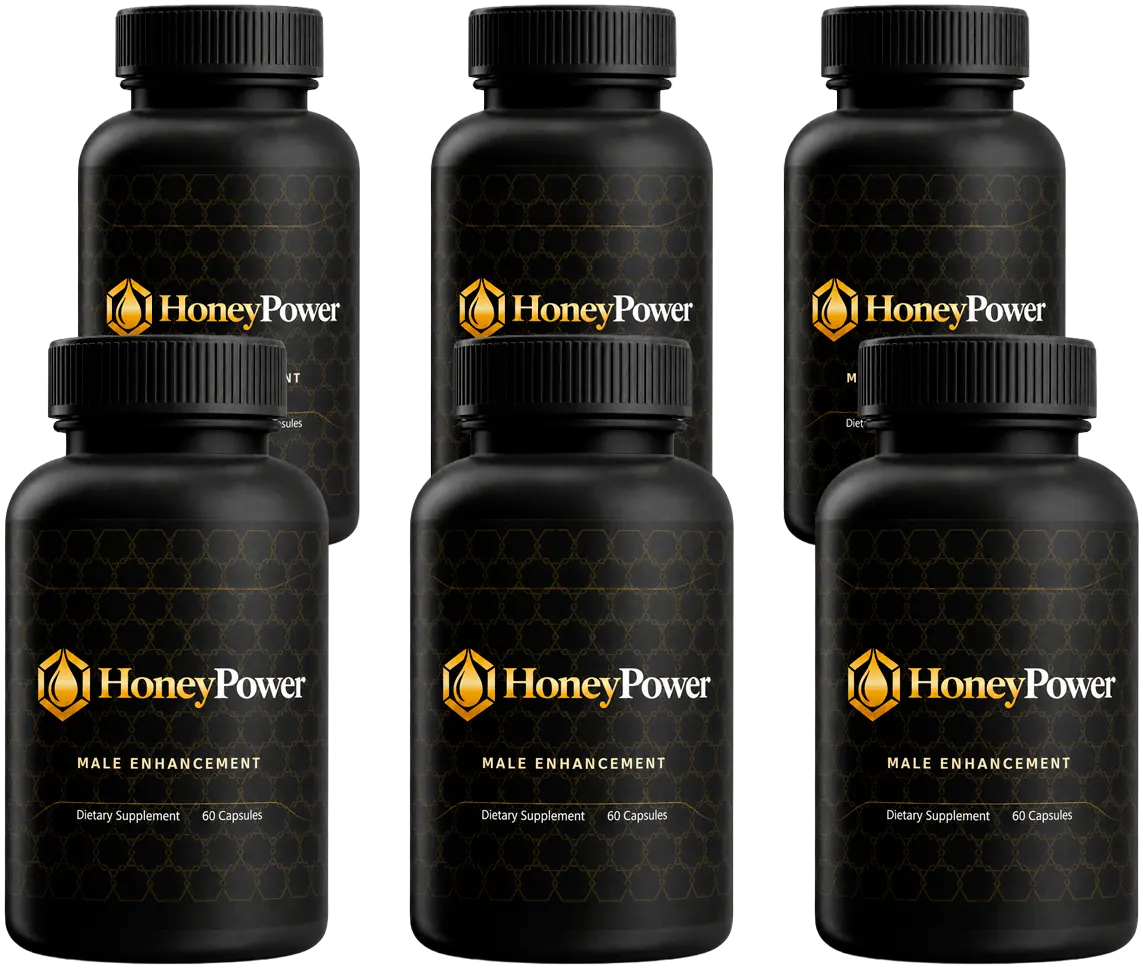
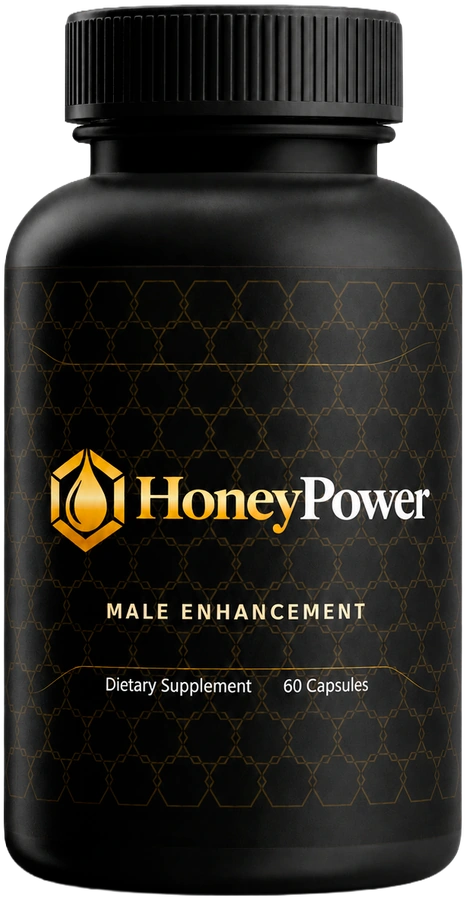
The front of the bottle carries four lines and no more: the brand name, the words MALE ENHANCEMENT, the words Dietary Supplement, and the count. Sixty capsules. That is the whole of the front, and the bottle is photographed front-on in every image the seller ships.
Two pieces of artwork go further. The sheet titled INSIDE HONEYPOWER lays the six ingredients out as picture cards and closes with a strip reading 60 CAPSULES, SIX NAMED INGREDIENTS, DIETARY SUPPLEMENT. The sheet titled HOW HONEYPOWER WORKS repeats the same six in the same order and adds a four-step routine.
Six names in a fixed order. The seller's own product paperwork lists the same six in the same sequence, which is not true of every product in this category.
| Printed on the front | What it tells a buyer |
|---|---|
| HoneyPower | The brand, and the only word on the front that is not a category term |
| MALE ENHANCEMENT | The seller's own positioning line. It is reported here as what the bottle says and is not adopted as a claim by this retail desk |
| Dietary Supplement | The regulatory category. It sets the ceiling on everything the product may claim |
| 60 Capsules | Two a day makes a bottle last about a month, which is what the pack ladder is built around |
Read off the product photography in assets, not from a description of it.
The six HoneyPower ingredients, one at a time
The chip on each card is the amount that ingredient's own published research ran at. It is a research figure and it belongs to those studies rather than to this bottle.
Pure Honey
trials ran at 10 g a dayHoney leads the name and leads the artwork, and it is the only item here that most buyers have already eaten this week. The research on it is real and it is about something else: an umbrella review published in 2025 pooled the dosage work on cardiometabolic outcomes and settled on roughly ten grams a day as the amount those reviews were built on.
Sports nutrition runs it far higher. A 2025 cycling study matched honey against a conventional carbohydrate drink across three hours of steady riding, and a soccer-simulation trial did the same over ninety minutes of intermittent work. Both used honey as fuel, by the gram, which is a different proposition from a share of a capsule. Ten grams is two heaped teaspoons, so the honey in this bottle is there for what it brings to the blend rather than as a dose of anything.
Panax Ginseng
Panax ginsengtrials ran at 1,400 to 3,000 mg a dayThis is the strongest name on the bottle and the reason the other five get read at all. The 2021 Cochrane review is the current summary: red ginseng has been tested in men more often than any other botanical here, and the reviewers rated the certainty of that evidence as low. An earlier systematic review reached the same shape of conclusion from a smaller set.
A Sao Paulo trial ran 3,000 mg a day of Korean red ginseng for twelve weeks. A 143-man trial ran 2,000 mg a day of a tissue-cultured extract for eight. A berry-extract study ran 1,400 mg a day. Nothing in that range fits comfortably inside a six-ingredient capsule taken twice a day. Ginseng also carries the one interaction here with a randomised trial behind it rather than a theory: American ginseng reduced warfarin's effect in healthy volunteers, which the safety page sets out in full.
Maca Root
Lepidium meyenii3,000 mg a day worked, 1,500 mg did notMaca is the one ingredient on this label with a study that ran two amounts side by side and reported which one moved. The dose-finding trial gave 1,500 mg a day to one group and 3,000 mg a day to another. The higher amount separated from placebo and the lower one did not.
That is unusually useful. Most botanical research reports a single dose and leaves a reader guessing whether half of it would do. Here the guess has been made, and the answer is no. A twelve-week trial had already run both amounts against placebo for sexual desire, and a systematic review of four trials collected the set.
Maca also separates this category from hormones more clearly than anything else here. The companion hormone paper measured six reproductive hormones in the same men and found none of them changed while the desire scores did.
Tribulus Terrestris
Tribulus terrestristrials ran at 400 to 750 mg a dayTribulus is the most recognisable name in the aisle and the weakest hormone story on this bottle. The androgen study gave it to young men and measured testosterone, androstenedione and luteinising hormone directly. Nothing moved. A five-week rugby trial at 450 mg a day changed neither strength nor body composition, and an eight-week resistance-training study reported the same.
The picture is better, though still modest, where the outcome is function. A 2026 meta-analysis of eight trials and a placebo-controlled study in men with late-onset hypogonadism both report an effect on erectile function scores. A 2025 review collected the doses those trials used, which is where the 400 to 750 mg a day range comes from. A review ranking the botanicals against each other puts tribulus below ginseng and maca, so it earns its place on a label for function rather than for hormones.
Horny Goat Weed
Epimedium speciesno randomised trial in men at any doseThe mechanism here is genuinely interesting and the human evidence is genuinely absent, and both halves of that matter. Icariin inhibits the same enzyme that the prescription drugs in this category inhibit. A structural study of icariin analogues mapped which features drive that inhibition, and a 2026 review collects the mechanism work.
A screen of 97 plants for the same enzyme puts Epimedium in a crowded field rather than on its own. And the only modern randomised trial of a purified Epimedium extract, at 740 mg a day of prenylflavonoids, was run in postmenopausal women for bone, as was a 24-month study at 60 mg of icariin a day. So the dose column for this row is drawn from trials in a different population answering a different question, which is worth knowing before the name on the front does any persuading.
Black Pepper Extract
Piper nigruman absorption modifier, not an activePiperine is here to change what the other five do rather than to do anything itself. The study that identified the effect showed it inhibits both P-glycoprotein and CYP3A4, the transporter and the enzyme that between them handle a large share of everything swallowed.
The effect runs in two directions over time, which is the part usually left out. Piperine also activates the pregnane X receptor, which induces the very enzyme it inhibits acutely. A review of black pepper and drug absorption and a chapter on piperine's own pharmacology both treat it as a pharmacokinetic agent rather than a nutrient. For a reader on prescription medicine this is the row that matters most on the whole bottle, and the detail sits on the safety page.
How the six HoneyPower names divide into three jobs
Two names carry the evidence, two carry the tradition, and two carry the blend.
A six-ingredient list is not six equal parts. Read this one by what each name is asked to do and it falls into three groups of two.
| Job | Which two | What that group brings |
|---|---|---|
| The evidence | Panax ginseng, maca root | Both have randomised trials in men, both have a known dose, and both ran eight to twelve weeks. Everything checkable about this formula lives here |
| The tradition | Tribulus terrestris, horny goat weed | Long histories, strong recognition, and evidence that thins as you push on it. Tribulus has trials with mixed results; Epimedium has mechanism work and no randomised trial in men |
| The vehicle | Pure honey, black pepper extract | Neither is here to act on its own. Honey carries the brand and the taste; piperine changes how the gut and liver handle what arrives with it |
A grouping made by this desk from the published evidence for each name, not a division the seller prints.
If the ginseng and the maca are present in amounts anywhere near what their trials used, the other four are a bonus. If they are not, the other four will not carry the bottle on their own. That is the whole question this label leaves open, and it is answered on the mechanism page.
Which HoneyPower ingredients carry human trials
Six names, six very different depths of human research behind them.
Evidence grading in this category has been done systematically. A review that graded 37 ingredients used in male performance products found most sit on animal work or on a single small study, and an analysis of the six best-selling products sold online reached the same place from the shelf rather than from the literature.
| Ingredient | Best human evidence in men | How far it carries |
|---|---|---|
| Panax ginseng | A Cochrane review, plus three dose-specific randomised trials | The furthest of the six, and the reviewers still rated certainty low |
| Maca root | A dose-finding trial and a twelve-week desire trial | Second, and unusually clean because two doses were run side by side |
| Tribulus terrestris | A 2026 meta-analysis of eight trials on erectile function | Modest on function; nothing on androgen production in healthy young men |
| Pure honey | Cardiometabolic and sports-fuel work, none of it about vitality | Real research, aimed at a different outcome at a far larger dose |
| Horny goat weed | Enzyme and mechanism studies; trials in postmenopausal women for bone | No randomised trial in men at any dose |
| Black pepper extract | Pharmacokinetic studies of piperine's effect on other compounds | Studied as a modifier of absorption rather than as an active |
Each row is sourced in the list at the foot of this page.
A 2026 meta-analysis of fourteen herbal trials and a scoring study of 25 marketed blends both land on one observation about products of this shape: the ingredient list is usually better than the amounts behind it.
Honest dosage analysis: what a HoneyPower serving would have to weigh
One table, one total, and the ceiling a two-capsule serving imposes on it.
Here is the arithmetic, done once on this website and nowhere else on it. Add the doses the published trials used for four of these six names and the total comes to about seven and a half grams a day. Put honey's own ten grams beside it and the figure passes seventeen.
Two capsules of this size hold somewhere around one and a half grams between them, which is the physical ceiling on this serving whatever the split inside it turns out to be. That is true of most six-name capsules in this category rather than of this one in particular, and the research figures below are printed so a reader can hold the two side by side and judge for themselves.
| Trial dose, per day | Ingredient | Running total |
|---|---|---|
| 3,000 mg | Panax ginseng, Sao Paulo trial | 3,000 mg |
| 3,000 mg | Maca root, the amount that separated from placebo | 6,000 mg |
| 740 mg | Epimedium prenylflavonoids, the one modern trial | 6,740 mg |
| 750 mg | Tribulus, top of the range the reviews collected | 7,490 mg |
| 10,000 mg | Honey, the cardiometabolic dose | 17,490 mg |
Four botanicals plus honey. Piperine is left out because its studied role is to change the absorption of something else rather than to supply a dose of its own.
Not that the capsule is empty, and not that the six names are decorative. It means the sensible way to judge this bottle is by running it for the length of a trial rather than by reading the front. The timeline page sets out what that looks like week by week.
HoneyPower ingredient questions
How many ingredients does HoneyPower have?
Does HoneyPower list the amount of each ingredient?
Which HoneyPower ingredient has the best evidence?
Is there a proprietary blend on the HoneyPower label?
Is HoneyPower a testosterone product?
Does the HoneyPower honey make it unsuitable for anyone?
Sources for the HoneyPower ingredient list
Every study named above, grouped in the order the artwork names the ingredient it belongs to.
- Norouzzadeh M, Barazandeh S, Hasan Rashedi M, et al. Dosage exploration of the effects of honey and its derivatives on cardiometabolic outcomes: an overview of systematic reviews and GRADE-assessed updated meta-analysis. Nutr Diabetes. 2025;15(1):48. PMID 41261111. https://pubmed.ncbi.nlm.nih.gov/41261111/
- Fortis HO, Ravikanti S, Barrett JS, et al. Could It Bee? Honey Ingestion Induces Comparable Metabolic Responses to Traditional Carbohydrate-Based Sports Nutrition Product During 3-Hr Steady-State Cycling and Subsequent Exercise Capacity Test. Int J Sport Nutr Exerc Metab. 2025;35(5):424-432. PMID 40675563. https://pubmed.ncbi.nlm.nih.gov/40675563/
- Abbey EL, Rankin JW. Effect of ingesting a honey-sweetened beverage on soccer performance and exercise-induced cytokine response. Int J Sport Nutr Exerc Metab. 2009;19(6):659-72. PMID 20175433. https://pubmed.ncbi.nlm.nih.gov/20175433/
- Arico MO, Caselli D, Stefanizzi P, et al. Infant Botulism and Honey Exposure: Global Epidemiology, Prevention Policies, and Communication Strategies. Acta Paediatr. 2026;115(7):1429-1433. PMID 41964486. https://pubmed.ncbi.nlm.nih.gov/41964486/
- Lee HW, Lee MS, Kim TH, et al. Ginseng for erectile dysfunction. Cochrane Database Syst Rev. 2021;4(4):CD012654. PMID 33871063. https://pubmed.ncbi.nlm.nih.gov/33871063/
- Jang DJ, Lee MS, Shin BC, et al. Red ginseng for treating erectile dysfunction: a systematic review. Br J Clin Pharmacol. 2008;66(4):444-50. PMID 18754850. https://pubmed.ncbi.nlm.nih.gov/18754850/
- de Andrade E, de Mesquita AA, Claro Jde A, et al. Study of the efficacy of Korean Red Ginseng in the treatment of erectile dysfunction. Asian J Androl. 2007;9(2):241-4. PMID 16855773. https://pubmed.ncbi.nlm.nih.gov/16855773/
- Kim TH, Jeon SH, Hahn EJ, et al. Effects of tissue-cultured mountain ginseng (Panax ginseng CA Meyer) extract on male patients with erectile dysfunction. Asian J Androl. 2009;11(3):356-61. PMID 19234482. https://pubmed.ncbi.nlm.nih.gov/19234482/
- Choi YD, Park CW, Jang J, et al. Effects of Korean ginseng berry extract on sexual function in men with erectile dysfunction: a multicenter, placebo-controlled, double-blind clinical study. Int J Impot Res. 2013;25(2):45-50. PMID 23254461. https://pubmed.ncbi.nlm.nih.gov/23254461/
- Yuan CS, Wei G, Dey L, et al. Brief communication: American ginseng reduces warfarin's effect in healthy patients: a randomized, controlled trial. Ann Intern Med. 2004;141(1):23-7. PMID 15238367. https://pubmed.ncbi.nlm.nih.gov/15238367/
- Gonzales GF, Cordova A, Vega K, et al. Effect of Lepidium meyenii (MACA) on sexual desire and its absent relationship with serum testosterone levels in adult healthy men. Andrologia. 2002;34(6):367-72. PMID 12472620. https://pubmed.ncbi.nlm.nih.gov/12472620/
- Shin BC, Lee MS, Yang EJ, et al. Maca (L. meyenii) for improving sexual function: a systematic review. BMC Complement Altern Med. 2010;10:44. PMID 20691074. https://pubmed.ncbi.nlm.nih.gov/20691074/
- Dording CM, Fisher L, Papakostas G, et al. A double-blind, randomized, pilot dose-finding study of maca root (L. meyenii) for the management of SSRI-induced sexual dysfunction. CNS Neurosci Ther. 2008;14(3):182-91. PMID 18801111. https://pubmed.ncbi.nlm.nih.gov/18801111/
- Gonzales GF, Cordova A, Vega K, et al. Effect of Lepidium meyenii (Maca), a root with aphrodisiac and fertility-enhancing properties, on serum reproductive hormone levels in adult healthy men. J Endocrinol. 2003;176(1):163-8. PMID 12525260. https://pubmed.ncbi.nlm.nih.gov/12525260/
- Neychev VK, Mitev VI. The aphrodisiac herb Tribulus terrestris does not influence the androgen production in young men. J Ethnopharmacol. 2005;101(1-3):319-23. PMID 15994038. https://pubmed.ncbi.nlm.nih.gov/15994038/
- Rogerson S, Riches CJ, Jennings C, et al. The effect of five weeks of Tribulus terrestris supplementation on muscle strength and body composition during preseason training in elite rugby league players. J Strength Cond Res. 2007;21(2):348-53. PMID 17530942. https://pubmed.ncbi.nlm.nih.gov/17530942/
- Antonio J, Uelmen J, Rodriguez R, Earnest C. The effects of Tribulus terrestris on body composition and exercise performance in resistance-trained males. Int J Sport Nutr Exerc Metab. 2000;10(2):208-15. PMID 10861339. https://pubmed.ncbi.nlm.nih.gov/10861339/
- Vilar Neto JO, de Moraes WMAM, Pinto DV, et al. Effects of Tribulus (Tribulus terrestris L.) Supplementation on Erectile Dysfunction and Testosterone Levels in Men - A Systematic Review of Clinical Trials. Nutrients. 2025;17(7):1275. PMID 40219032. https://pubmed.ncbi.nlm.nih.gov/40219032/
- Suharyani S, Amanda B, Angellee J, et al. Tribulus terrestris for management of patients with erectile dysfunction: a systematic review and meta-analysis of randomized trials. Int J Impot Res. 2026;38(1):11-18. PMID 40360723. https://pubmed.ncbi.nlm.nih.gov/40360723/
- GamalEl Din SF, Abdel Salam MA, Mohamed MS, et al. Tribulus terrestris versus placebo in the treatment of erectile dysfunction and lower urinary tract symptoms in patients with late-onset hypogonadism: A placebo-controlled study. Urologia. 2019;86(2):74-78. PMID 30253697. https://pubmed.ncbi.nlm.nih.gov/30253697/
- Santos HO, Howell S, Teixeira FJ. Beyond tribulus (Tribulus terrestris L.): The effects of phytotherapics on testosterone, sperm and prostate parameters. J Ethnopharmacol. 2019;235:392-405. PMID 30790614. https://pubmed.ncbi.nlm.nih.gov/30790614/
- Meng C, Jiang R. Molecular mechanisms of icariin in the treatment of erectile dysfunction. Sex Med Rev. 2026;14(3):qeag051. PMID 42476543. https://pubmed.ncbi.nlm.nih.gov/42476543/
- Chau Y, Li FS, Levsh O, Weng JK. Exploration of icariin analog structure space reveals key features driving potent inhibition of human phosphodiesterase-5. PLoS One. 2019;14(9):e0222803. PMID 31539416. https://pubmed.ncbi.nlm.nih.gov/31539416/
- Anand Ganapathy A, Hari Priya VM, Kumaran A. Medicinal plants as a potential source of Phosphodiesterase-5 inhibitors: A review. J Ethnopharmacol. 2021;267:113536. PMID 33137431. https://pubmed.ncbi.nlm.nih.gov/33137431/
- Yong EL, Cheong WF, Huang Z, et al. Randomized, double-blind, placebo-controlled trial to examine the safety, pharmacokinetics and effects of Epimedium prenylflavonoids, on bone specific alkaline phosphatase and the osteoclast adaptor protein TRAF6 in post-menopausal women. Phytomedicine. 2021;91:153680. PMID 34352588. https://pubmed.ncbi.nlm.nih.gov/34352588/
- Zhang G, Qin L, Shi Y. Epimedium-derived phytoestrogen flavonoids exert beneficial effect on preventing bone loss in late postmenopausal women: a 24-month randomized, double-blind and placebo-controlled trial. J Bone Miner Res. 2007;22(7):1072-9. PMID 17419678. https://pubmed.ncbi.nlm.nih.gov/17419678/
- Bhardwaj RK, Glaeser H, Becquemont L, et al. Piperine, a major constituent of black pepper, inhibits human P-glycoprotein and CYP3A4. J Pharmacol Exp Ther. 2002;302(2):645-50. PMID 12130727. https://pubmed.ncbi.nlm.nih.gov/12130727/
- Wang YM, Lin W, Chai SC, et al. Piperine activates human pregnane X receptor to induce the expression of cytochrome P450 3A4 and multidrug resistance protein 1. Toxicol Appl Pharmacol. 2013;272(1):96-107. PMID 23707768. https://pubmed.ncbi.nlm.nih.gov/23707768/
- Han HK. The effects of black pepper on the intestinal absorption and hepatic metabolism of drugs. Expert Opin Drug Metab Toxicol. 2011;7(6):721-9. PMID 21434835. https://pubmed.ncbi.nlm.nih.gov/21434835/
- Derosa G, Maffioli P, Sahebkar A. Piperine and Its Role in Chronic Diseases. Adv Exp Med Biol. 2016;928:173-184. PMID 27671817. https://pubmed.ncbi.nlm.nih.gov/27671817/
- Balasubramanian A, Thirumavalavan N, Srivatsav A, et al. An Analysis of Popular Online Erectile Dysfunction Supplements. J Sex Med. 2019;16(6):843-852. PMID 31036522. https://pubmed.ncbi.nlm.nih.gov/31036522/
- Kuchakulla M, Narasimman M, Soni Y, et al. A systematic review and evidence-based analysis of ingredients in popular male testosterone and erectile dysfunction supplements. Int J Impot Res. 2021;33(3):311-317. PMID 32358510. https://pubmed.ncbi.nlm.nih.gov/32358510/
- Petre GC, Francini-Pesenti F, Vitagliano A, et al. Dietary Supplements for Erectile Dysfunction: Analysis of Marketed Products, Systematic Review, Meta-Analysis and Rational Use. Nutrients. 2023;15(17):3677. PMID 37686709. https://pubmed.ncbi.nlm.nih.gov/37686709/
- Ho CY, Hsu CH, Chien TJ. Herbal dietary supplements for erectile dysfunction: A systematic review and meta-analysis of randomized-controlled trials. J Tradit Complement Med. 2026;16(1):109-120. PMID 41696741. https://pubmed.ncbi.nlm.nih.gov/41696741/
- Morgado A, Tsampoukas G, Sokolakis I, et al. Do "testosterone boosters" really increase serum total testosterone? A systematic review. Int J Impot Res. 2024;36(4):348-364. PMID 37697053. https://pubmed.ncbi.nlm.nih.gov/37697053/
Order HoneyPower with the research doses in front of you
Six named ingredients, 60 capsules a bottle, and 180 days from purchase to decide whether it earned its place in your routine.
One bottle $69 · six bottles $294 · 180-day money-back guarantee
Order HoneyPower On The Official WebsiteTwo capsules a day · 60 per bottle · lot HON-26/GE-4888