HoneyPower Official Website › Blog › The Maca Threshold
Maca At 1,500 mg Did Nothing. At 3,000 mg It Did.
One double-blind trial ran two doses of maca against each other at the same time, in the same people, for the same twelve weeks. The higher arm improved and the lower arm did not. That is the closest thing this whole category has to a threshold, and it is worth more than a dozen single-dose studies.
- A dose-finding trial ran 1,500 mg and 3,000 mg a day side by side. Only the higher arm produced a result.
- The twelve-week desire trial reported improvement from about week eight, not from week one.
- Its companion paper measured reproductive hormones in the same men and found them unchanged.
- A four-month study reported improved semen parameters, again with no hormone change.
- Maca is a food crop eaten in quantity in the Peruvian Andes, which is why its safety record is as unremarkable as it is.
The trial that ran two doses at once
the dose-finding study where 1.5 g did nothing and 3 g did is a double-blind, randomised, pilot dose-finding study. The subject was sexual dysfunction associated with SSRI antidepressants, and the design is what makes it valuable well beyond that context: it ran a 1,500 mg daily arm and a 3,000 mg daily arm alongside each other.
The higher arm produced a measurable improvement. The lower one did not.
Almost nothing else in this category does that. The normal pattern is a single dose against placebo, which tells you whether that dose worked and nothing about what would have happened at half of it. A trial that tests two doses in the same population at the same time hands a reader a threshold, and a threshold is directly usable when you are looking at a number printed on a panel.
| Study | Dose or doses | Length | Result |
|---|---|---|---|
| Dording 2008, dose-finding | 1,500 mg and 3,000 mg a day, both arms | 12 weeks | The 3,000 mg arm improved; the 1,500 mg arm did not |
| Gonzales 2002, desire | 1,500 mg and 3,000 mg a day | 12 weeks | Improved sexual desire from week eight |
| Gonzales 2003, hormones | Same participants, same doses | 12 weeks | Serum reproductive hormones unchanged |
| Gonzales 2001, semen parameters | 1,500 mg and 3,000 mg a day | 4 months | Improved semen parameters, again with no hormone change |
| Gonzales-Arimborgo 2016, extracts | Black and red maca extracts | 12 weeks | Acceptable safety, modest effects, 175 participants at altitude |
Five studies and one number keeps recurring: three grams a day. The first row is the only one in the whole category built to find out what happens below it.
What the twelve-week desire trials found
the 12-week desire trial ran twelve weeks in adult healthy men at 1,500 and 3,000 mg a day and reported improved sexual desire. The detail worth carrying away is the timing: the effect appeared at around week eight rather than in the first fortnight.
the systematic review of four trials pooled four randomised trials and described the evidence as limited but suggestive, which remains a fair summary. Four small trials is a thin base, and the review authors said so.
a 175-person trial of the spray-dried extract is the largest of the modern studies, testing black and red maca extracts in 175 people living at altitude over twelve weeks, and reporting acceptable safety alongside modest effects on the measures it took.
The hormone paper nobody quotes
the companion hormone paper is the companion to the desire trial. The same research group measured serum reproductive hormones in the same participants over the same twelve weeks, and reported them unchanged.
This is the paper that gets left out of marketing copy, and leaving it out changes what the first paper means. Desire moved. Testosterone, luteinising hormone and the rest of the panel did not.
So maca is not a testosterone story, whatever a box implies by putting it in a formula alongside tribulus. Whatever it is doing, it is doing it by some route nobody has pinned down, and honest writing about it says that rather than borrowing a mechanism from a neighbouring ingredient.
The desire paper and the hormone paper came out of the same trial and were published a year apart. One is quoted constantly in this aisle and the other almost never. When you see maca cited on a sales page, it is worth checking which of the two is doing the work.
The four-month study, and why it is separate
the four-month semen study ran longer than the others, at four months, and measured semen parameters in adult men at the same 1,500 and 3,000 mg doses. It reported improvements, and once again without a hormone change to explain them.
It is listed separately here because fertility and desire are different outcomes with different clinical meanings, and a page that blurs them is doing the reader no favours. A supplement is not a fertility treatment, and this study is not evidence that it is one. What it adds is a third independent measure moving in the same direction on the same plant.
Root powder, extract, and why the ratio decides everything
Every dose above is a dose of maca root material. That matters because the gap between a trial and a panel is often bridged, legitimately, by concentration.
A 10:1 extract is made by processing ten grams of raw material down to one gram of extract. If the ratio is honest and the constituents survive the process, 300 mg of a 10:1 extract is arguably standing in for 3,000 mg of root. That is a real argument and some labels are entitled to make it.
The condition is that the label has to print the ratio. Without it, a small number on a panel is just a small number, and the reader has no way to tell whether they are looking at a concentrated extract or a tenth of a working dose.
| What a label might print | How it reads against 3,000 mg |
|---|---|
| 3,000 mg of maca root powder | The dose that worked, at the form that was tested |
| 1,500 mg of maca root powder | The dose that did not work in the one trial that tested both |
| 300 mg of maca root powder | A tenth of the working dose, with no standardisation offered to close the gap |
| A 10:1 maca extract at 300 mg | Arguably equivalent to 3,000 mg of root, if the ratio is real and stated |
| “Maca root” with no amount | Nothing can be said about it either way, which is itself the finding |
Only the fourth row is an argument a label can make. It has to print the ratio to make it.
See where maca sits on the HoneyPower label
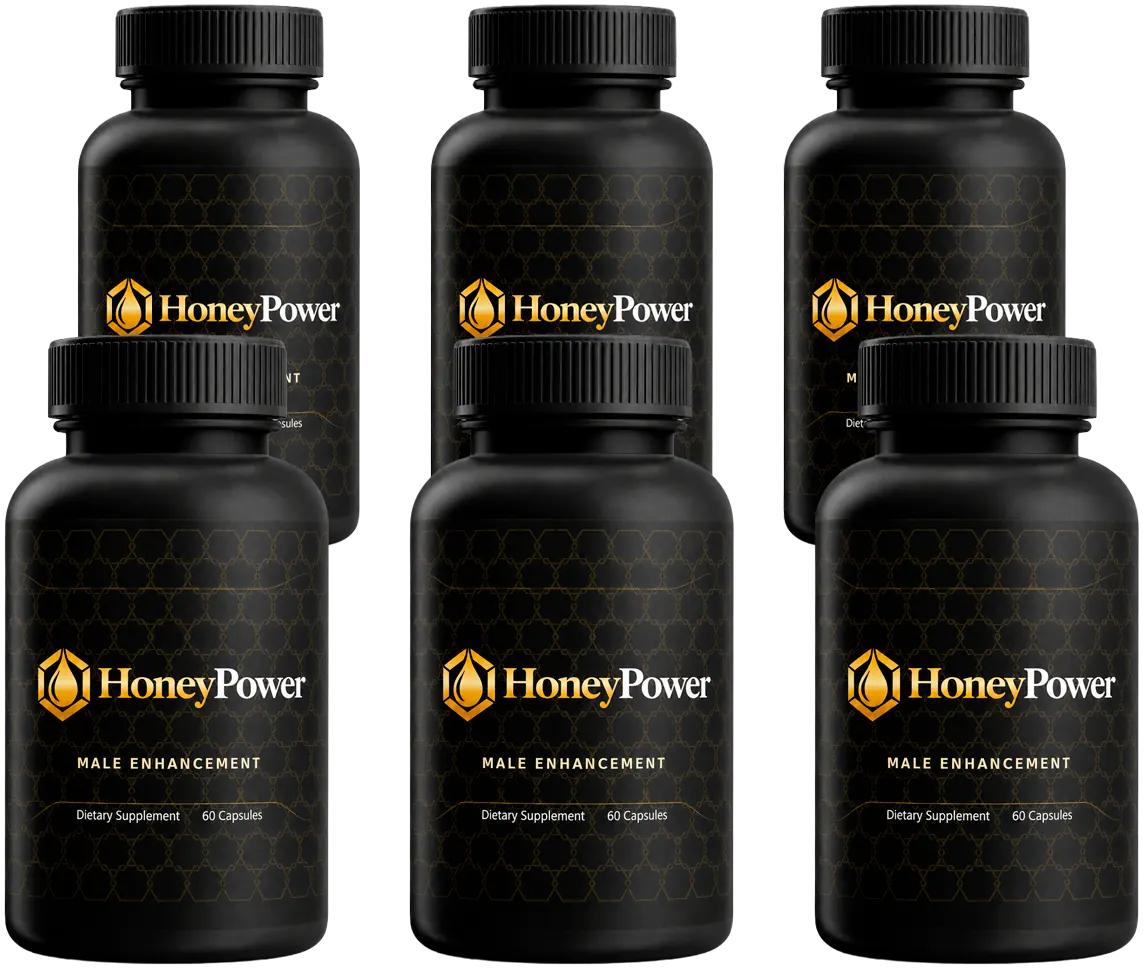
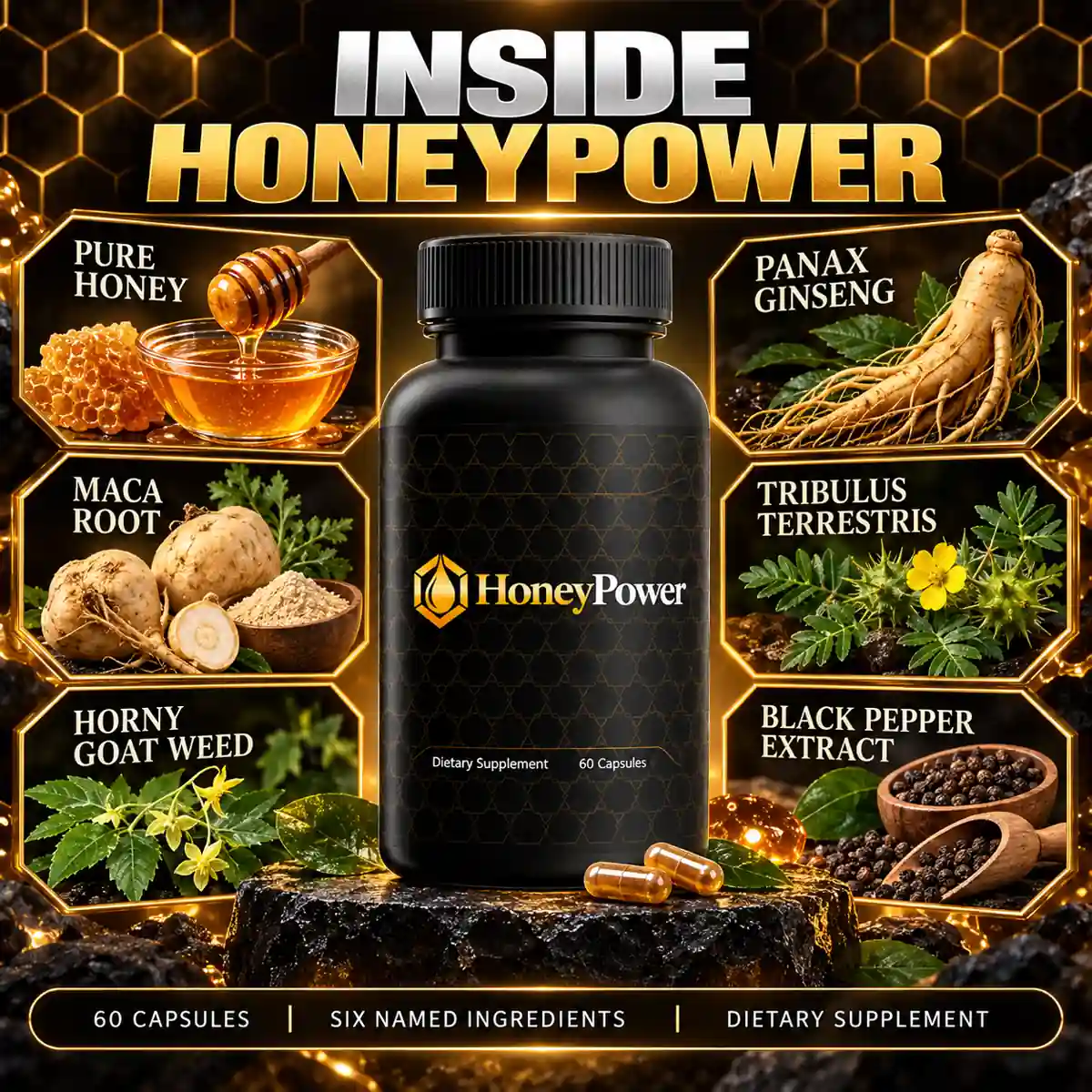
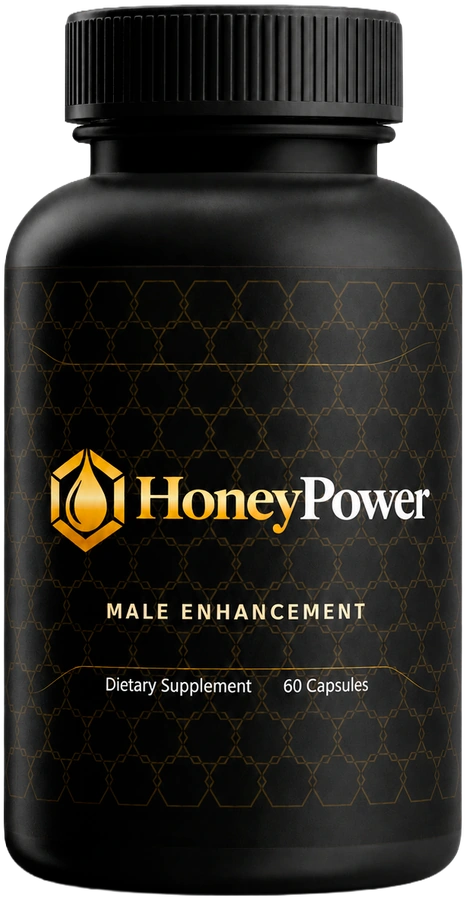
Maca root is third of 6 names on this bottle, with no amount, no form and no extract ratio published for it. The ingredients page sets the 3,000 mg figure beside the name instead.
One bottle $69 · six bottles $294 · 180-day money-back guarantee
Order HoneyPower On The Official WebsiteTwo capsules a day · 60 per bottle · lot HON-26/GE-4888
Reading a maca row against 3,000 mg
Three grams a day is the number to carry. It is what worked in the dose-finding trial, it is the upper arm of the desire trials, and it is the upper arm of the semen study. It recurs because the same research group used it repeatedly and because it is the dose that kept producing results.
One and a half grams is the second most useful number, and it is useful precisely because it failed. A documented negative at a stated dose is rare in supplement research, and it sets a floor a reader can reason from.
Put a panel beside those two figures and most maca rows in this aisle sit well below both, with no extract ratio offered to close the distance. That is not a reason to avoid maca. It is a reason to be realistic about what a small unstandardised row is likely to be contributing.
Why eight weeks is the number to plan around
Every study above ran twelve weeks or longer, and the desire trial's effect appeared around week eight. Nothing here acts in days.
That has a practical consequence for anybody trying a formula containing maca. A judgement made at two weeks is a judgement about nothing, and a bottle abandoned at three weeks was never given the span its own research used. The distributor's stated typical wait for this product is 3–4 weeks, which is broadly consistent with the literature.
It also means a long refund window is worth more than it looks. A thirty-day guarantee expires before the research says the ingredient would have shown anything.

Four questions worth asking of any maca row
- How much? Three grams a day worked and one and a half did not, in the one trial built to find out.
- Root powder or extract? If extract, at what ratio. Without a ratio the comparison cannot be made.
- Black, red or yellow? The 2016 study tested black and red separately. Most labels do not say.
- Am I expecting a hormone change? Two studies measured hormones on maca and neither found one. Expect what the trials found rather than what the box suggests.
Maca has the cleanest dose signal in this category: 3,000 mg a day did something and 1,500 mg a day did not, in the same trial. It also has two hormone papers reporting no change at all. Both halves belong in any honest account, and a label that prints no amount leaves a reader unable to use either of them.
References
- Dording CM, Fisher L, Papakostas G, et al. A double-blind, randomized, pilot dose-finding study of maca root (L. meyenii) for the management of SSRI-induced sexual dysfunction. CNS Neurosci Ther. 2008;14(3):182-91. PMID 18801111. https://pubmed.ncbi.nlm.nih.gov/18801111/
- Gonzales GF, Cordova A, Vega K, et al. Effect of Lepidium meyenii (MACA) on sexual desire and its absent relationship with serum testosterone levels in adult healthy men. Andrologia. 2002;34(6):367-72. PMID 12472620. https://pubmed.ncbi.nlm.nih.gov/12472620/
- Gonzales GF, Cordova A, Vega K, et al. Effect of Lepidium meyenii (Maca), a root with aphrodisiac and fertility-enhancing properties, on serum reproductive hormone levels in adult healthy men. J Endocrinol. 2003;176(1):163-8. PMID 12525260. https://pubmed.ncbi.nlm.nih.gov/12525260/
- Shin BC, Lee MS, Yang EJ, et al. Maca (L. meyenii) for improving sexual function: a systematic review. BMC Complement Altern Med. 2010;10:44. PMID 20691074. https://pubmed.ncbi.nlm.nih.gov/20691074/
- Gonzales-Arimborgo C, Yupanqui I, Montero E, et al. Acceptability, Safety, and Efficacy of Oral Administration of Extracts of Black or Red Maca (Lepidium meyenii) in Adult Human Subjects: A Randomized, Double-Blind, Placebo-Controlled Study. Pharmaceuticals (Basel). 2016;9(3):49. PMID 27548190. https://pubmed.ncbi.nlm.nih.gov/27548190/
- Gonzales GF, Cordova A, Gonzales C, et al. Lepidium meyenii (Maca) improved semen parameters in adult men. Asian J Androl. 2001;3(4):301-3. PMID 11753476. https://pubmed.ncbi.nlm.nih.gov/11753476/
Give HoneyPower the span its research used
Three bottles is twelve weeks, which is what the maca and ginseng trials ran. The 180-day window covers it comfortably.
One bottle $69 · six bottles $294 · 180-day money-back guarantee
Order HoneyPower On The Official WebsiteTwo capsules a day · 60 per bottle · lot HON-26/GE-4888