HoneyPower Official Website › Blog › Does HoneyPower Really Work? What the Research Can and Cannot Say
Does HoneyPower Work? What the Research Can and Cannot Say
Quick answer. Does HoneyPower work? Nobody can promise it, because no published trial tested the HoneyPower bottle itself. The research is on single ingredients at known doses. Ginseng and maca have the most human data, while tribulus and horny goat weed have much less. The bottle prints no amounts, so it cannot be matched to those trials. The guarantee runs 180 days, longer than any of those trials lasted.
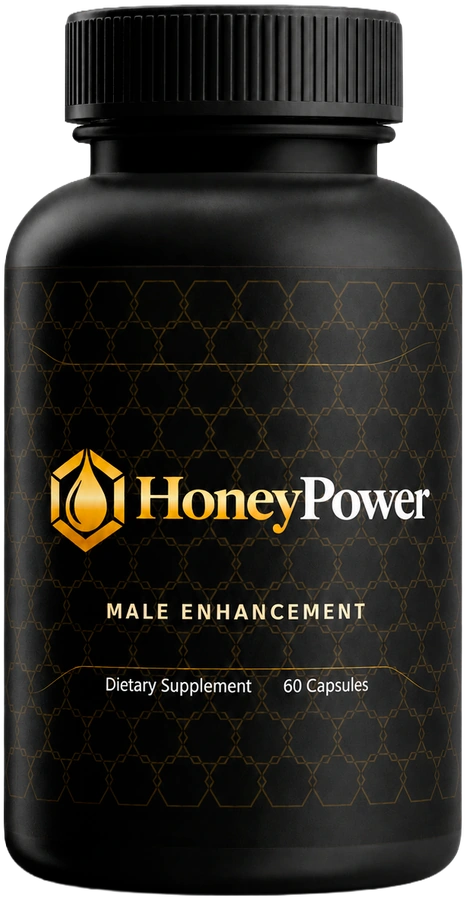
If you decide to try it, the guarantee runs 180 days, which is longer than any trial behind these ingredients lasted.
See today’s price and guarantee
Disclosure: this desk earns a commission on sales made through its order buttons. The price you pay is the one shown at checkout.
- No trial of the HoneyPower bottle is cited. The evidence is on single ingredients.
- Ginseng and maca carry the human evidence. Both have a known dose of 3,000 mg a day from trials of 8 to 12 weeks.
- Tribulus showed no robust testosterone effect across ten trials. No randomised trial of horny goat weed in men, at any dose, is cited.
- Black pepper extract is an absorption modifier, not an active ingredient.
- HoneyPower prints no amount for any ingredient, so it cannot be matched to a study dose.
- This is not a testosterone product, and this website makes no such claim.
What does "work" even mean for a supplement?
People who ask whether HoneyPower works usually mean one of three things. Will I feel more energy? Will my drive improve? Will my performance change? Each is a different question, and each needs a different kind of evidence.
A supplement can only claim to support the structure or function of the body. That is the language on the HoneyPower sheet. It says the capsule helps support vitality, stamina and drive. It does not say it fixes anything.
So the fair question is narrower. Do the ingredients have human research behind them, at what dose, and does this bottle match that dose? We answer the first two below. The third cannot be answered, because the amounts are not printed.
Has the HoneyPower bottle itself been tested?
The sources used for this website cite no trial of the HoneyPower product. There is no published study with this capsule, this lot or this brand name. We will not suggest otherwise.
What exists is research on single ingredients. A reader can lay that research next to the six names on the label. That is useful, but it is not the same as proof that the combined capsule works. A mix of six things can behave differently from each one alone.
What does the ginseng research say?
Panax ginseng is the best-evidenced name on the bottle. The trials used large daily amounts. the Sao Paulo trial at 3,000 mg a day used 3,000 mg a day of Korean red ginseng for 12 weeks. a 143-man trial at 2,000 mg a day used 2,000 mg a day. the ginseng berry study at 1,400 mg a day used 1,400 mg a day of berry extract.
A 12-week exercise trial found that a 500 mg ginsenoside complex separated from 100 mg on physical performance (see the trial). The 2021 Cochrane review rates the overall evidence as low certainty (read it here).
In plain words: there is something here, but it is modest, and it depends on a large dose of a named preparation. HoneyPower does not say which preparation or how much.
What does the maca research say?
Maca has one clean dose-finding study. It ran two amounts side by side. At 3,000 mg a day it helped. At 1,500 mg a day it did not (the study). The 12-week desire trials ran at 1,500 and 3,000 mg (the 12-week desire trial).
The companion paper measured reproductive hormones in the same men and found them unchanged (the companion hormone paper). So whatever maca did in those trials, it did not do it by moving testosterone.
That dose gap is the key lesson. A capsule with maca on the label may or may not reach the amount that worked. Without a printed figure, you cannot tell.
What about tribulus, horny goat weed and black pepper?
Tribulus is the classic vitality botanical and the weakest hormone story on the bottle. Trials that reported a benefit used 400 to 750 mg a day. One trial of 450 mg a day for five weeks changed nothing in trained athletes (the rugby trial).
Horny goat weed, which is Epimedium, is an enzyme story. The only modern randomised trial of a purified extract was in postmenopausal women, for bone. The 24-month icariin trial was also in women. No randomised trial in men at any dose is cited.
Black pepper extract is there for its piperine. It is studied as an absorption modifier rather than as an active ingredient. It also matters for medicines, which the safety guide cover in more detail.
How do the six ingredients compare at a glance?
| Ingredient | Human evidence cited | Dose the research used |
|---|---|---|
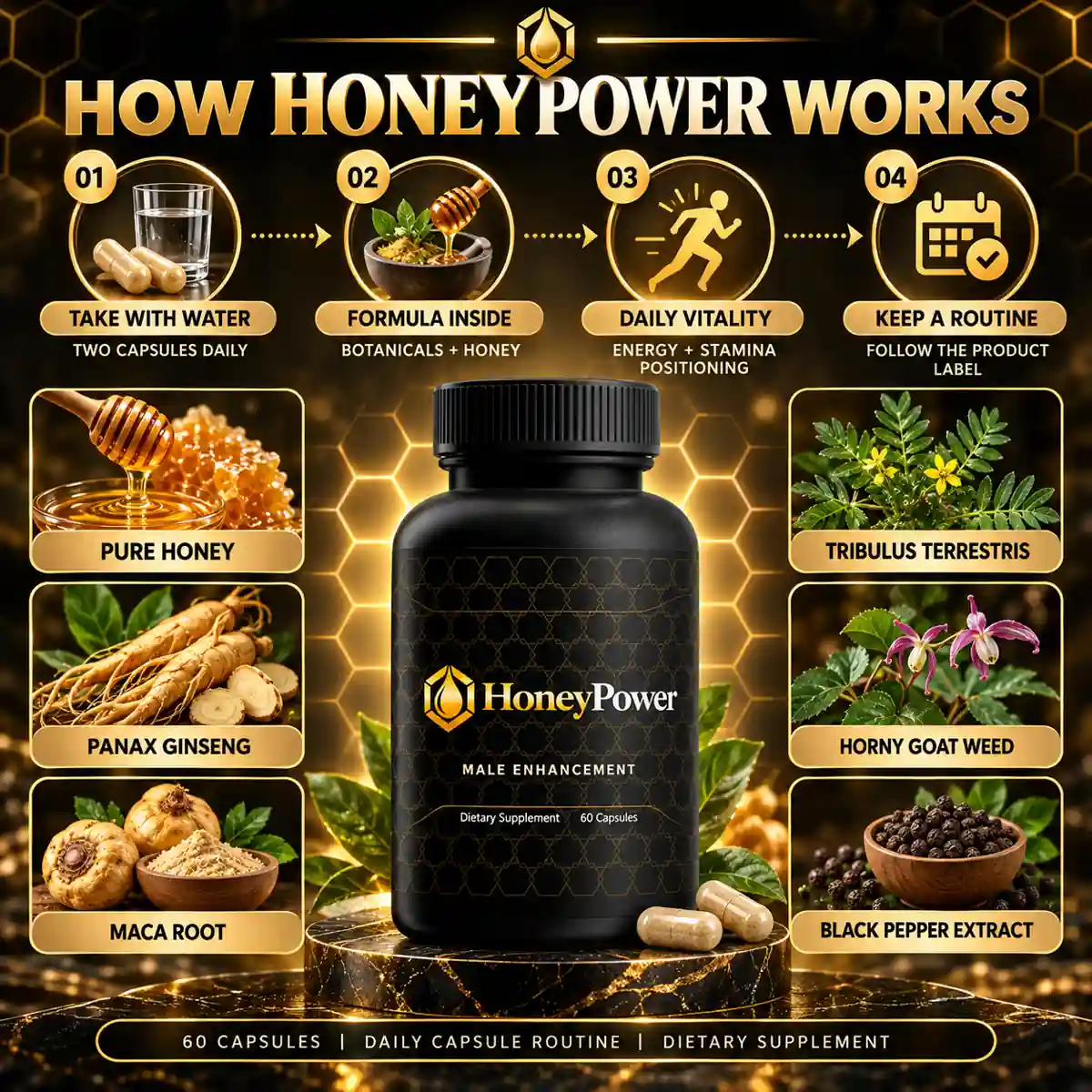
| Panax ginseng | Most of any name on the bottle, rated low certainty | 1,400 to 3,000 mg a day |
| Maca root | One dose-finding trial, 12-week desire trials | 3,000 mg worked, 1,500 mg did not |
| Tribulus terrestris | No robust testosterone effect across ten trials | 400 to 750 mg a day where a benefit was reported |
| Horny goat weed | No randomised trial in men | 740 mg extract and 60 mg icariin, both in women |
| Pure honey | Research on other outcomes, not male vitality | 10 g a day pooled for cardiometabolic outcomes |
| Black pepper extract | Absorption modifier | The dose that matters is the one it changes in something else |
HoneyPower prints no amount for any of these six.
How long would you need to judge it?
The ginseng and maca trials ran 8 to 12 weeks. In the maca desire trial, change showed from about week eight, not week one. The distributor's own pack says most buyers wait 3 to 4 weeks. Reviewers in the pack also mention a slow start.
That is a reason to avoid judging after a few days. It is also a reason to keep the date you bought and the order ID, since the 180-day window is long enough for a fair trial of your own.
Frequently asked questions
Does HoneyPower really work?
No trial of the HoneyPower bottle is cited, so no one can promise it works. The research is on single ingredients, mainly ginseng and maca, at doses the bottle does not print.
Is HoneyPower a testosterone booster?
No. This website makes no such claim. Maca did not move six reproductive hormones in men, and tribulus changed nothing in androgen studies cited here.
Which HoneyPower ingredient has the best evidence?
Panax ginseng has the most human evidence of the six names, though the 2021 Cochrane review rates it low certainty. Maca has the cleanest dose-finding trial.
How long do the studies say you need to take these ingredients?
The ginseng and maca trials ran 8 to 12 weeks. The maca desire trial reported change from about week eight.
Can I see before and after results for HoneyPower?
No verified before and after results are published. The review figures on this website are the distributor's own summary, not verified transcripts and not evidence.
What should I do if I want better performance or drive?
See a doctor first. New or changed erection problems can be a sign of heart disease or diabetes. A supplement is not a diagnosis or a treatment.
Our view
Does HoneyPower work? The honest answer is that nobody has shown it. The ingredients have research, some of it decent, but the research is at doses that this label does not print. A hopeful reader and a doubtful reader can both read the same facts and stay where they started.
We think the fair way to treat it is as a daily habit you test on yourself with a safety net. Use the guarantee window, keep your order ID and talk to a doctor if anything changes. Do not expect a fast jump, and do not use it in place of care.
Last updated . Written by the HoneyPower Team, medically reviewed by Dr. Sevann Helo, MD, Physician.